
Why I Started My Business to Bridge Profit and Purpose

A lot of small and medium-sized businesses are already doing good. They sponsor the youth team. They buy a table at the gala. They donate to the food drive. They give employees a volunteer day when the calendar allows.
Those efforts matter. They come from generous people who care about where they live, work, and grow their companies.
But I kept seeing the same gap.
The business cared, but no one had the time to step back and ask bigger questions. What are we trying to change? Who are the right partners? What do nonprofits actually need? How do we know whether this support made a difference? How does this connect to our employees, customers, reputation, values, and long-term growth?
Good intentions were everywhere. Strategy was harder to find.
That is why I started this business. I believe relationship building is the key to stronger communities and stronger companies. I also believe many businesses want to be thoughtful community partners, but they need someone who can sit between the profit and nonprofit worlds and translate needs, goals, expectations, and opportunities with care.
That is the work I am here to do.
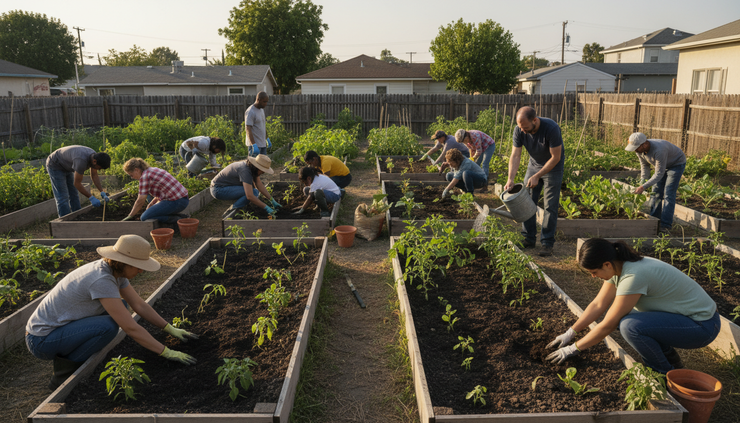
I kept seeing good work happen without a real strategy
Small and medium-sized businesses often have a strong sense of place. The owner knows the local school principal. Employees volunteer at the shelter. Customers ask for raffle baskets. A founder wants to support a cause because of a personal connection.
This kind of giving can be genuine and generous. It can also become scattered.
One month, the business says yes to a golf outing. The next month, it donates products to an auction. Later, it sponsors a 5K, sends a team to a volunteer day, and cuts a check at year-end. Each choice may be kind. But together, they may not add up to a clear community investment strategy.
No one is asking:
Which issues align with the company’s values and community role?
Which nonprofits are best positioned to create lasting change?
What kind of support would help most?
How can employees participate in a meaningful way?
What commitments are realistic for the company over time?
What should be measured beyond dollars given?
Most business owners and CEOs are not ignoring these questions. They are running companies. Their teams are already stretched. Community work gets added to someone’s plate, often without the time, authority, or tools to make it strategic.
That creates a missed opportunity.
The business misses the chance to strengthen relationships and understand its real impact. The nonprofit misses the chance to have a deeper conversation about what it needs most. The community receives help, but sometimes not the kind of help that creates sustainable change.
I started this business because I saw that gap and knew it could be filled.
The bridge between profit and nonprofit has to be built on trust
Businesses and nonprofits often speak different languages.
A business may think in terms of brand awareness, employee culture, customer loyalty, reputation, and return on investment. A nonprofit may think in terms of program outcomes, community need, operating costs, grant restrictions, staff capacity, and long-term sustainability.
Both are valid. Both matter.
The problem comes when those worlds only meet at the surface level. A nonprofit asks for a sponsorship. A business asks for logo placement. Everyone is polite. The check gets written. The event happens. Then the relationship pauses until the next ask.
That is not partnership. That is a transaction.
Real partnership requires better questions.
A business should be able to ask what kind of support will make a lasting difference. A nonprofit should feel safe naming the needs that are not always easy to fund. Those needs may include staff time, technology, evaluation, transportation, training, rent, or general operating support.
Those things are not always “fun” funding. They may not look exciting in a photo. But they can be the difference between a program that survives month to month and an organization that can plan for the future.
I see myself as a conduit between these worlds. I help businesses understand community needs without turning impact into a marketing exercise. I help nonprofits communicate what sustainability really requires. I help both sides move from a one-time ask into a relationship with purpose, clarity, and respect.
That bridge matters because trust does not happen by accident. Someone has to tend to it.

Relationship building is the strategy
I believe relationships are the foundation of every strong community effort.
A company can write checks without relationships. It can show up once without relationships. It can sponsor events without relationships. But if it wants to become a trusted community partner, relationships have to come first.
I help organizations identify the right partners, not just the most visible ones. I help leaders understand where their company can be genuinely useful. I help employees connect with causes in ways that feel meaningful rather than performative. I help nonprofits and businesses have honest conversations about expectations, capacity, and results.
That work can take many forms.
Community partnership building
Finding and nurturing relationships with nonprofits, civic groups, schools, coalitions, small businesses, and local leaders.
Community investment planning
Turning annual donations, sponsorships, and volunteer activities into a clear strategy tied to values, needs, and measurable outcomes.
Employee engagement design
Creating opportunities for employees to give, volunteer, serve, mentor, learn, and connect without adding chaos to nonprofit partners.
Reputation and impact advising
Helping CEOs and leadership teams understand how community decisions shape trust, visibility, and long-term goodwill.
Partnership activation
Making sure relationships do not sit in a spreadsheet, but turn into shared work that benefits both the company and the community.
This is why titles like chief community officer, chief impact officer, head of community partnerships, strategic partnerships advisor, and CSR consultant all resonate with me. They point to the same core need. Organizations need someone focused on the health, direction, and value of their relationships.
Community impact is not a side project when it is done well. It is part of how an organization shows up in the world.
ROI belongs in community work, but it has to be defined honestly
Some people get uncomfortable when ROI enters the conversation around giving. I understand why. Community work should not be reduced to a sales tactic. Nonprofits should not have to prove their worth only through what a business gets back.
At the same time, businesses need to understand the return on their community investments. That is not wrong. It is responsible.
The key is to define ROI in a broader, more honest way.
ROI can include stronger relationships with community leaders. It can include employee pride and participation. It can include customer trust. It can include better understanding of local needs. It can include improved reputation, deeper partnerships, and clearer alignment between values and action.
It can also include community outcomes, which should never be treated as secondary. A better ROI conversation asks about both sides.
When a business can see these pieces clearly, community involvement stops feeling random. It becomes intentional.
That does not mean every act of generosity needs a dashboard. Some moments call for quick help, especially in a crisis. But over time, companies need to know where their resources are going, why those choices matter, and how those commitments fit into a bigger picture.
A strategy gives generosity direction. It does not take the heart out of it.

Nonprofits need space to name what would truly help
One reason I started this business is because I care deeply about the nonprofit side of the conversation.
Nonprofit leaders are some of the most resourceful people I know. They stretch small budgets. They respond to urgent needs. They manage staff, volunteers, funders, boards, programs, compliance, and community expectations. They often carry a heavy emotional load, too.
Yet when they sit across from a potential business partner, they may feel pressure to make the need sound simple, exciting, or easy to package.
That pressure can distort the conversation.
A business may want to fund something visible, like a special event or a branded volunteer project. The nonprofit may need something less visible, like database support, staff training, insurance coverage, program evaluation, or unrestricted funding to keep the lights on and the team paid.
Both sides need honesty.
Businesses deserve to know what their funding can realistically do. Nonprofits deserve to explain what sustainable support looks like. Communities deserve partnerships that address real needs, not just easy photo opportunities.
I want to help create the conditions for those conversations.
That may mean helping a nonprofit clarify partnership opportunities in plain language. It may mean helping a business understand why unrestricted support can be powerful. It may mean slowing down a decision so the right people are included. It may mean asking whether a proposed volunteer project is actually helpful for the nonprofit or mostly convenient for the company.
Those questions are not obstacles. They are how stronger work gets built.
Random community involvement can become an intentional strategy
Many organizations do not need to start from scratch. They already have good instincts and good relationships. They just need structure.
The shift from random involvement to intentional strategy often looks like this:
Random community involvement | Intentional community strategy |
Saying yes to most requests | Choosing focus areas tied to values and need |
Donating when asked | Planning investments with clear goals |
Tracking dollars only | Looking at dollars, time, relationships, and outcomes |
Treating volunteering as a one-day activity | Connecting employees to year-round opportunities |
Supporting nonprofits separately | Building partnerships that reinforce each other |
Making decisions quietly | Communicating impact with humility and clarity |
This shift does not require a massive budget. In fact, small and medium-sized businesses can be especially effective because they are close to their communities. They can be flexible. They can know partners personally. They can act with care and consistency.
What they often need is someone to guide the process.
That is where I come in. I help leaders sort through requests, identify patterns, name priorities, and design a community investment approach that fits their size and values. I help them understand what they can say yes to, what they should say no to, and where they can build deeper commitments.
A thoughtful “no” can protect focus. A strategic “yes” can open the door to something lasting.
My role is to help organizations show up with purpose
I started this business because I know where my time creates the most value.
It is not in adding more noise. It is not in creating community activity for the sake of activity. It is not in chasing visibility without substance.
My best work happens when I am building and activating relationships.
That can mean representing a business in the community with care. It can mean sitting with a CEO to talk through reputation, responsibility, and impact. It can mean connecting a founder to nonprofit leaders who understand a cause they care about. It can mean helping employees find meaningful ways to serve. It can mean developing partnerships that benefit both the company and the community.
It also means paying attention to what is already happening.
Communities are full of people doing good work. The goal is not to take over. The goal is to listen, connect, support, and help resources flow in smarter ways.
I believe businesses can be a powerful force for good when they take community partnership seriously. I also believe nonprofits should not have to bend themselves into whatever shape is easiest for funders. The best work happens when both sides can be honest about goals, needs, limits, and possibilities.
That kind of honesty takes trust. Trust takes relationships. Relationships take time.
That is the business I built.

Profit and purpose can work together with the right guide
Profit and purpose do not have to compete. A healthy business can care about growth and community impact at the same time. A nonprofit can welcome business support without becoming a marketing tool. A community can benefit when resources, relationships, and strategy are aligned.
That alignment rarely happens by accident.
It happens when someone asks better questions. It happens when community investment becomes part of leadership conversations. It happens when businesses stop treating giving as a series of requests and start treating it as a relationship-based strategy. It happens when nonprofits are trusted enough to name what they truly need.
I started my business to bridge profit and purpose because I kept seeing good people on both sides who needed a connector, translator, advisor, and partner.
My work is to help organizations move from scattered goodwill to meaningful impact. To help CEOs understand community reputation and responsibility. To help employees connect to purpose. To help nonprofits build sustainable partnerships. To help businesses become known not only for what they sell, but for how they show up.
The takeaway is simple: doing good is a start, but doing good with intention is where real change begins.
I’m looking forward to what our future holds.
April


Comments